Showing posts with label chemistry. Show all posts

September 3, 2017

Atoms, compounds, and ions

Introduction to the atom


  • 1 Mole=6.02*1023 = Avogadro's number
  • 1 Mole(6.02*1023) of 12C atoms in 12g of C
  • mole's role: switching between amu and g
  • 1g=1mole of amu=6.02*1023amu
  • 1more of 27AI=27grams
  • 1mole of 56Fe=56grams
  • A(mass number)=Z(atomic number=proton number)+N(neutron number)
  • 18Fe- consists of: 9 proton, 9 neutron, 10 electron

ions and compounds


  • in covalent bonds, atoms share electrons
  • a group of atoms joined by covalent bonds is a molecule
  • there is NO such thing as a molecule of an ionic bond
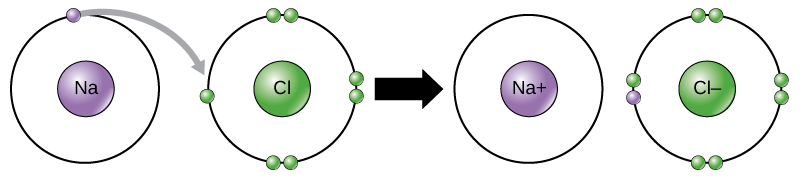
  • in ion bonds, electrons are fully transferred between two atoms, so that ions are formed
  • ionic bond: two oppositely charged ions attract each other
  • representing molecules: chemical formula, structural formula
  • *the group 3A elements link

names and formulas of ionic compounds


  • cation: ion with net positive charge
  • anion: ion with net negative charge
  • predicting charges on monatomic cations and anions
  • groups 1,2,13,14: usually give away valence electrons to become ions(C is sometimes an exception)
  • groups 15,16,17: usually negative charge, because is more likely to gain electrons not lose
  • most of the transition metals(d-block)are polyvalent
  • naming of transition metal cation: chromium(II)chloride=Cr2+
  • naming anions: add suffix '-ide'
  • formulas and naming of basic ionic compounds: 
  1. always name the cation(+)before the anion(-)
  2. when naming the cation, don't include the word ion or charge unless it's a polyvalent ion
  3. any ionic compounds have a net charge of zero(they cancle each other)
  • polyatomic ions: the ion that contains more than one atom
  • polyatomic ion is formed when a neutral molecule(covalent bond) gain or lose electrons
  • the chemical formula of calcium hydroxide is: Ca(OH)2 not CaOH2

Isotopes and mass spectrometry 


  • isotope: same # of proton, electron but different # of neutron
  • atomic weights: weighted average calculated by summing up each isotope's atomic mass
  • mass number=number of netrons+number of protons(atomic number)
  • 1u(amu)=1/12 of the mass of single neutral atom of carbon-12 *12 is the mass #
  • mass of a neutron=1amu
  • mass of a proton=1amu
  • mass of an electron=considered to be zero amu
  • atomic mass=how many protons and neutrons*1amu(not exact, but close)

July 8, 2017

article summary: the principles of pH

source: https://byo.com/malt/item/1494-the-principles-of-ph

pH change that happens during the mashing


  • mashing=precipitation of phosphates(found in brewing water)+amino acids derived(taken) from the malt
  • phosphoric acid(H3PO4) disassociate
  • (if calcium ions are present)calcium phosphate disassociate, leaving behind hydrogen ions
  • higher(than 10-7mol/L) H+ concentration in a solution=acidic link
  • (if magnesium ions are present)magnesium phosphate do the same thing, but the effect on pH is less dramatic
  • if calcium sulfate is added, the calcium ions react with the amino acid group(present within the solution)then leave behind hydrogen ions
  • these changes in mineral composition+the precipitation of calcium salts->pH decrease(prior to fermentation)
  • the carbonate(CO3-2), bicarbonate(HCO3-) ions act as buffers to pH decrease

Proper mash pH


  • optimal pH of an infusion mash: 5.2~5.6
  • high pH during the mash increase the amount of dextrins, less fermentable wort
  • polyphenols(such as tannins), silica compounds easily extracted under high pH: instability, astringency*
  • *when sparging, pH of the last running climbs to 5.8~6.0, stop the sparging

Controlling Mash pH


  • with lots of carbonate ions in the water(high mash pH): 
  • add calcium ions from gypsum(calcium sulfate) or calcium chloride
  • or add organic acids(phosphoric acid, lactic acid)
  • if a brewer is using very soft water(low mash pH):
  • add a little bit of chalk(calcium carbonate), baking soda(sodium bicarbonate)
  • link Understanding residual alkalinity&pH

The importance of boil pH


  • during the boil, calcium phosphate continue to be precipitated
  • optimal post-boil wort pH: 5.0~5.2
  • Maillard reactions are not favored at lower pH(for light colored beer)
  • to lower pH, add a little bit of calcium(gypsum, calcium chloride, acid)

Fermentation


  • optimal ending pH less than 4.4(larger 4.2~4.6, ale 3.8)
  • during fermentation, pH continue to drop: 
  • yeast take in ammonium ions(strongly basic) and excrete organic acids

other helpful articles

Effective hardness=Ca(ppm)/1.4+Mg(ppm)/1.7
RA=Alkalinity(as CaCO3)-Effective hardness or (50*Bicarbonate)/61-Effective hardness
full size Residual Alkalinity Nomograph link