Showing posts with label beer article. Show all posts

February 5, 2018

Craft beer is marching to entice the palate of Korean

original source(Korean) link

Craft beer is marching to entice the palate of Korean - August 25, 2017


The craft beer fad arrived at The Blue House. President Moon had a ‘pub meeting’ with CEOs from major conglomerates at The Blue House last July. The beer they had had at that time was Gangseo, which was produced by medium-sized Korean brewery, Seven Brau. Choosing craft beer, which is still unfamiliar to public, as an official beverage at the meeting attracted people’s attention to the brewery and craft beer. Sales figures reflected the attention. Home Plus reported that the sales of Gangseo and Dalseo, two beer brands of Seven Brau, showed 150% increase since the meeting.

Rapid spread of craft beer

Craft beer means beer produced not by giant conglomerates but by small or medium-sized breweries. According to Brewers Association in the U.S., craft breweries must ensure a small amount of production (below 0.95 billion liters per year), independents (below 25% capital from outside of the company), and being traditional (use traditional ingredients and processes). There are over 4,000 craft breweries in the U.S. Craft beer has become increasingly popular in the recent couple of years.

It has become one of the cultural phenomenon of young generations; hotels, big shopping marts, and convenient stores are eager to distribute craft beer. Lots of new attempts for researching and developing craft beer also has appeared. ‘Playground Brewery’ is one of them. It differs from other breweries, which focuses only on producing and distributing beer, by providing Korean foods. For example, a Korean style pork stir fries or hot tofu stews pairing well with craft beer. The way to enjoy beer is diversified, too. ‘Can Maker by Craftbros’ sells craft beer to-go. The store sells 40 more craft beers only brewed in Korea. ‘Gangnam Pale ale’, popular with its logo design symbolizing the mark of the Gangnam subway station, led a trend symbolizing landmarks of local districts like Gangseo or Dalseo.

Beer giants invest craft beer

Korea has become a promising market for craft beer companies outside the country.  Brooklyn Brewery, the prominent brewery with 30 years of history in New York, U.S., launched its sister company ‘Jeju beer’ in Jeju Island and it is the first branch of Brooklyn Brewery in Asia continent. Its first recipe, Jeju Wheat Ale, was designed by Garrett Oliver who was the winner of 2014 James Beard Award, called the Oscar for chefs. The beer was developed to pair with traditional Jeju local cuisines and includes Jeju mandarin peels as a special ingredient.

Big companies want to invest in craft breweries more. It is also true in the U.S., the biggest craft beer market in the world. Top craft breweries were merged into beer giants. AB InBev, the world’s largest brewery company merged Goose Island Brewing in 2011; it had been a landmark brewery in Chicago. It took over five more breweries in 2015 including Golden Road Brewing, which had the largest production size in Los Angeles. In Korea, conglomerates merged and operated brewpubs by themselves. Sinsegae and YG foods operate its own brewpubs; Jinjuham consolidated with Kabrew Brewery in 2015. Smaller craft breweries like The Booth, Amazing Brewing Company, and Platinum succeeded to receive billions of wons (millions of Canadian dollars) of investments. LF, the giant in the fashion industry, bought more than 50% of stocks of Indulge, a pronounced liquor distributor.

Many expect that domestic craft beer can fight back market shares from imported beers which are welcomed in big supermarket chains. Since Home Plus introduced a series of local craft beers like Gangseo, Dalseo, and Haeundae in July, the market share of domestic beers reached over 50%. Given the fact that the increase of sales of major brands was below 10% compared to last month, surging sales of craft beer as 27.3% led sales of a whole domestic beers’ share in the market.

January 23, 2018

You can buy just one sip among 60 kinds of craft beer

This is an article introducing the first 'beer tap house' kind of store in Korea. I wish I could have visited there but it was opened after I came to Canada.
original source(Korean) link

You can buy just one sip among 60 kinds of craft beer - November 14, 2017


At first, you have to wear a bracelet with a microchip inside. There are sixty LCD monitors showing its flavors in front of you. You choose what you want, tag your bracelet on one of those vending machines, and serve yourself as much beer as you want. You can see the price you will pay on the monitor as you fill your glass. When you leave the store, checkout will be only one time, depending on the bill logged in the bracelet. This is how you drink beer at Tab Public, which opened on November 2017 in Hannamdong, Seoul. This kind of store is called ‘tab beer house’ because it is similar to fueling a car in a self-serve gas station.

Tab Public is the first of its kind, which was introduced and got popular in U.S., then in Korea. Customers can choose what they want and pay as much as they drink there. The selection of Tab Public includes Lambic, the appetizer beer; Helles and Pilsner, members of a big lager family; Ales, Sour beer, even barrel-aged ones with 11% of ABV. The brewery they are from, alcohol content, characteristic of flavor, brewing process and price are displayed on those LCD monitors. The price is between 100 and 500 won (10~50 cents) per 10 ml. You are allowed to just sip 10 ml, of course.

There are some instructions consumers may pay attention since they have to pour beer by themselves. For example, it is recommended to rinse a beer glass right before pouring beer and to hold the glass at 45 degrees to avoid unnecessary foam. Jihoon Yu, the owner of Tab Public, said that ordinary brewpubs provide beer flights to taste but they only provide a limited selection of beer in most cases. He intends to have a larger selection in the store and abundant information in the machine about craft beer.

January 22, 2018

Craft beer attracts Koreans in their 30's and 40's

I found an article summarizing the craft beer market in Korea.
original source(Korean) link

Craft beer attracts Koreans in their 30's and 40's - November 10, 2017


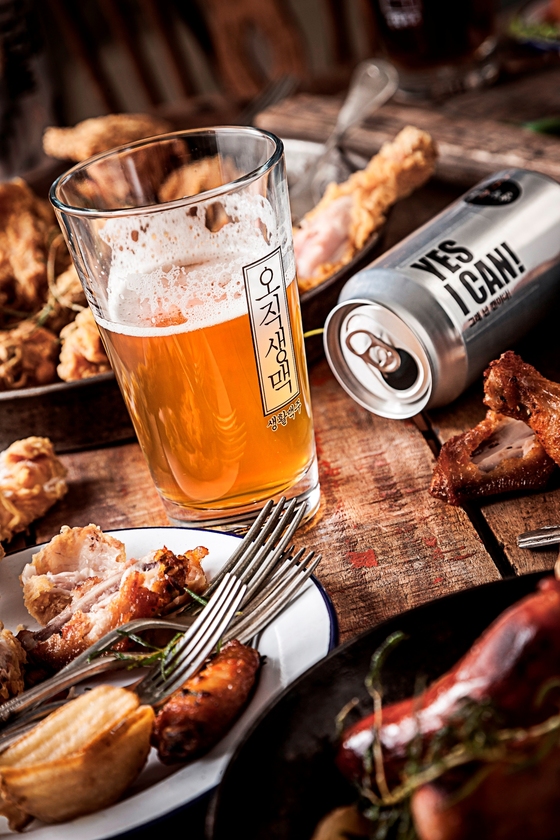
Staff are busy with serving beer and various foods in a craft beer brewpub ‘Saenghwal-Macjoo(daily beer)’ located Yeoyeedo, Seoul. The pub manager said that they have lots of customers who enjoy their meals with beer, even in weekdays. Every day, there are people enjoying their time drinking craft beer and chatting on the first floor of the pub. The pub's menu board written by hand writing draws people’s attentions. There are various groups of people including couples in their 20’s, office workers in their 30’s, and housewives in their 40’s. There rarely are empty seats in this pub after 8 PM every day.

As consumers' needs for diverse flavors and aromas from beer increase, craft beer with strong characters has been getting popular. Even 3 or 4 years ago, A small amount of pubs selling craft beer only was found around Itaewon or Hongdae. After a new legislation amended in 2014 however, the craft beer market has surged by new players including franchise brands, small importers, and microbreweries. According to a person who knows the industry well, the craft beer market in Korea has shown a rapid increase up to 100% every year. It still shares 20 billion wons so far, a small piece of 4.6 trillion wons (11 billion Canadian dollars) of a whole beer market, though.  Some insiders expect the craft beer can expand up to 2 trillion wons (2.3 billion Canadian dollars) market value.

The amendment of liquor tax legislation in 2002 was the first big step for the craft beer market in Korea. This change introduced a license of microbrewing and legalized brewpubs where craft beer can be sold and produced simultaneously. However, breweries under that law could not sell their beer out of the brewery. The new legislation adapted in 2014, allowing small breweries to distribute their beer out of a production site, ignited the rapid growing of the craft beer market in Korea. Lot of players from giant conglomerates to microbreweries owned by a couple of people continue to participate in the market and expand the size of it. A person from Korea Microbrewery Association said that there was only one microbrewery in Korea 16 years ago but now there are up to 80 operating breweries. He said “The number of entrepreneurs opening new craft brewpubs has been growing around places like Hongdae, Itawon, and Kyeongridan and we see there will be more and more in the foreseeable future.”

August 22, 2017

Kettle souring

Quirks of brewing: Kettle souring


  • quick-acting bacteria that deliver a distinctive, citric sour to beers like Berliner weisse, gose
  • Lactobacillus
  • it can acidify a wort in the course of a weekend-no years of barrel-aging required
  • it does not create layers of flavor, aroma the way wild yeast do 
  • traditional methods: sour mashing, pitch pure cultures of lactobacillus, pitch lactic acid straight in beers
  • today's method: kettle souring
  1. conduct a lactic fermentation on a whole batch of wort
  2. do this in brew kettles(Lactobacillus likes very warm, consistent temperatures)
  3. lactic fermentation produces a very acidic wort, without funky flavors a sour mash might produce
  4. then boil it right in the kettle to purify it
  5. finally, the brewer has a wort of a stable, predictable pH 
  6. it can use to acidify another beer to the level she desires
  7. both acidified and fresh worts go through a standard alcohol fermentation
That sounds intriguing. I thought that acidity produced by Lactobacillus was merely a sign of a failure of controlling an optimal fermentation temperature. The author of the article also said that the kettle souring method is the key to brewing a tart IPA, which could be the next big trend of the US craft beer scene where people more and more want juicy and fruity IPA. And when a touch of acidity that even our palate doesn't notice meet fruity hop oils, it can bring a smart consequence without adding real fruits. 

July 8, 2017

article summary: the principles of pH

source: https://byo.com/malt/item/1494-the-principles-of-ph

pH change that happens during the mashing


  • mashing=precipitation of phosphates(found in brewing water)+amino acids derived(taken) from the malt
  • phosphoric acid(H3PO4) disassociate
  • (if calcium ions are present)calcium phosphate disassociate, leaving behind hydrogen ions
  • higher(than 10-7mol/L) H+ concentration in a solution=acidic link
  • (if magnesium ions are present)magnesium phosphate do the same thing, but the effect on pH is less dramatic
  • if calcium sulfate is added, the calcium ions react with the amino acid group(present within the solution)then leave behind hydrogen ions
  • these changes in mineral composition+the precipitation of calcium salts->pH decrease(prior to fermentation)
  • the carbonate(CO3-2), bicarbonate(HCO3-) ions act as buffers to pH decrease

Proper mash pH


  • optimal pH of an infusion mash: 5.2~5.6
  • high pH during the mash increase the amount of dextrins, less fermentable wort
  • polyphenols(such as tannins), silica compounds easily extracted under high pH: instability, astringency*
  • *when sparging, pH of the last running climbs to 5.8~6.0, stop the sparging

Controlling Mash pH


  • with lots of carbonate ions in the water(high mash pH): 
  • add calcium ions from gypsum(calcium sulfate) or calcium chloride
  • or add organic acids(phosphoric acid, lactic acid)
  • if a brewer is using very soft water(low mash pH):
  • add a little bit of chalk(calcium carbonate), baking soda(sodium bicarbonate)
  • link Understanding residual alkalinity&pH

The importance of boil pH


  • during the boil, calcium phosphate continue to be precipitated
  • optimal post-boil wort pH: 5.0~5.2
  • Maillard reactions are not favored at lower pH(for light colored beer)
  • to lower pH, add a little bit of calcium(gypsum, calcium chloride, acid)

Fermentation


  • optimal ending pH less than 4.4(larger 4.2~4.6, ale 3.8)
  • during fermentation, pH continue to drop: 
  • yeast take in ammonium ions(strongly basic) and excrete organic acids

other helpful articles

Effective hardness=Ca(ppm)/1.4+Mg(ppm)/1.7
RA=Alkalinity(as CaCO3)-Effective hardness or (50*Bicarbonate)/61-Effective hardness
full size Residual Alkalinity Nomograph link